Allan & Ursula Ward: Port Owen, Cape West Coast, South Africa.

Shearwater 39:
- L.O.A. 43ft (13.22m)
- L.O.D. 39ft (12m)
- L.W.L. 34ft (10.3m)
- BEAM 13ft(3.9m)
- DRAFT 6ft(1.8m)


HOW IT ALL BEGAN .

I placed my order on Nebe Boats on the 19/10/1992 for what was initially planned to be a complete factory built yacht that l would sail home to Durban from Capetown once she was completed. Unfortunately due to the demise of Nebe Boats in the early days of her construction it did not turn out that way, so l decided to truck her home to Ramsgate on the KZN South Coast to finish building her in our garden at home.

For many years we could proudly boast that we had the most expensive piece of garden furniture in town, but at the time l had no idea of how massive this project would turn out to be. As anyone who has built a blue water cruiser will tell you, particularly if she is kitted out with all the systems and the equipment that a modern cruiser has onboard these days, it is a daunting task . Looking at the positive aspects of this project, l know the boat intimately in that l designed and installed the systems, so from a repair and maintenance perspective l have no issues carrying out the work that is necessary from time to time.


The big day arrived on the 29/8/2008 when we craned her out of the garden onto a rig to truck her through to Durban for launching . What followed was three months of preparations to ready her for the maiden voyage to our home port in Port Owen on the Cape West Coast.

We had a fast passage down the South African East Coast including a storm off the notorious Wild Coast and arrived in Port Owen in dense fog. Windward had passed her first test with flying colours and since then we have enjoyed some great sailing on the West Coast.


The master plan has always been to go cruising, so our plans are to leave for Brazil via Luderitz and St Helena Island at the end of February 2014. So far everything is on track although the “To Do“ list still grows each day.

The purpose of this blog is to record our adventure for ourselves, family and friends. Although it will probably end up being a brief summary of events while we are cruising, we hope you will enjoy and share some of our experiences with us.

LIVING THE DREAM .

Tuesday, May 31, 2016

CHAGUARAMAS , TRINIDAD .

THANK YOU FATHER FOR OUR DAILY ROTI , AMEN .
THE WELL KNOWN BLUE ROTI HOUSE AT POWERBOATS .

NOTHING QUITE LIKE EATING YOUR DAILY ROTI WHILE BEING WATCHED BY A BUNCH OF THESE GUYS ABOVE YOU IN THE TREES .

KAMIKAZE PELICANS .
AT NIGHT THE LIGHT AT THE END OF THE DOCK ATTRACTS THE FISH AND THEY ATTRACT THESE PELICANS WHO DIVE ON THEM FROM GREAT HEIGHTS OUT OF THE DARKNESS .

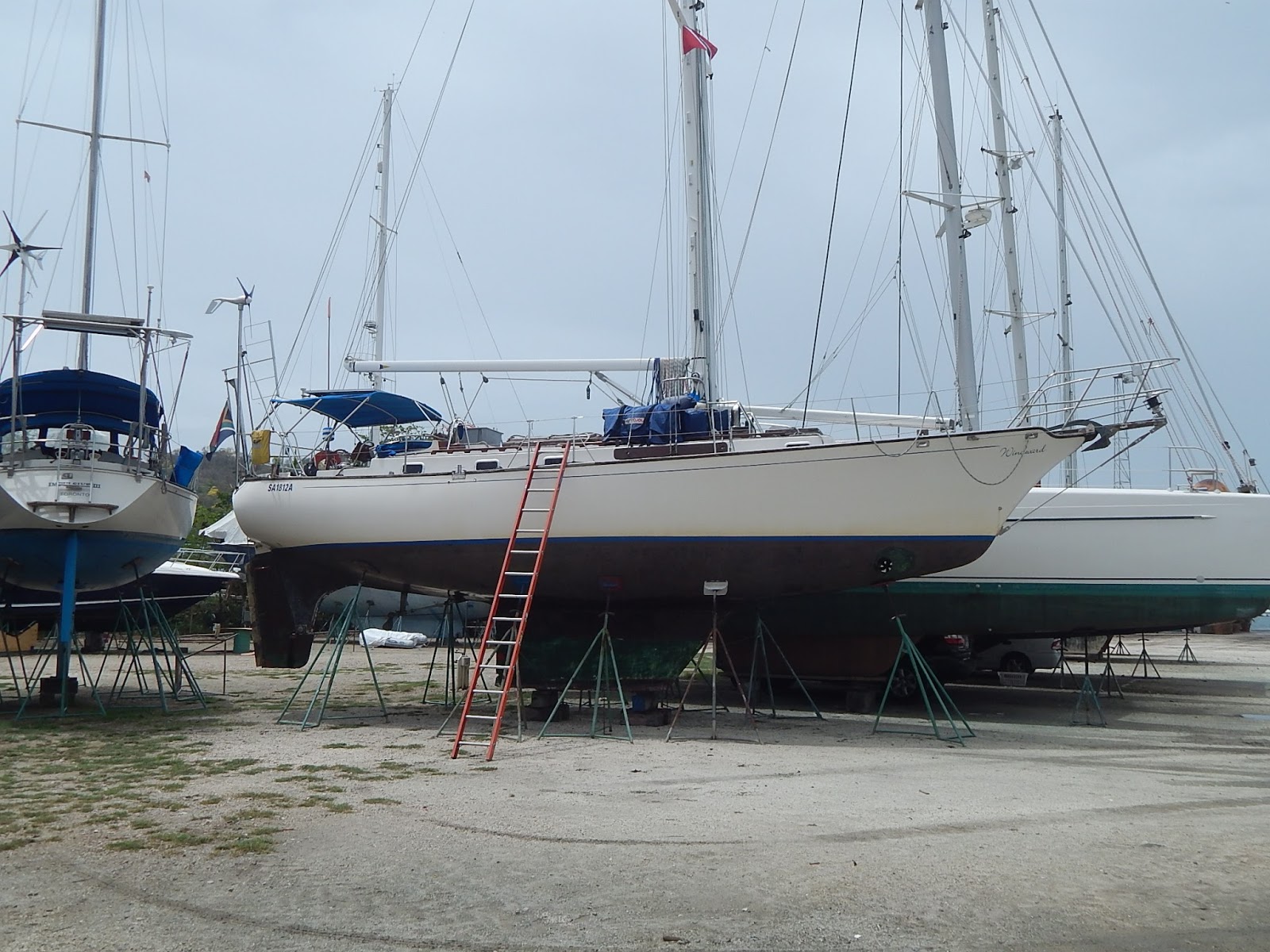
READY AND WAITING TO BE HAULED .

PLACING THE SLINGS .
NOTE THE RESIDENT DIVER CHECKING THAT THE SLINGS ARE CLEAR OF ANY UNDERBODY COMPONENTS .

UP , UP AND AWAY .
NOTE THE BROWN STAIN ABOVE THE WATERLINE FROM THE RIVERS IN BRAZIL AND FRENCH GUIANA .

THIS 150 TON TRAVEL-LIFT HANDLED WINDWARD WITH EASE .

BLASTING ALL THE NASTIES OFF OUR HULL .

ALMOST CLEAN AND READY TO BE TAKEN INTO THE YARD .

TRANSFERRED FROM THE TRAVEL-LIFT TO THIS SPECIALIST RIG TO BE TAKEN TO OUR ALLOCATED SPOT .

GETTING READY TO PLACE THE SUPPORTS UNDER THE HULL .

BLOCKING THE KEEL AND PLACING THE STANDS .

THESE GUYS ARE REAL PRO'S .
BUSY ADJUSTING THE STANDS TO GET EVEN PRESSURE AROUND THE HULL .

ALL DONE AND DUSTED .

OUR NEW FULL BOAT COVER TO PROTECT WINDWARD FROM THE CARIBBEAN SUN / RAIN .

TRINIDAD & TOBAGO SAILING ASSOCIATION .
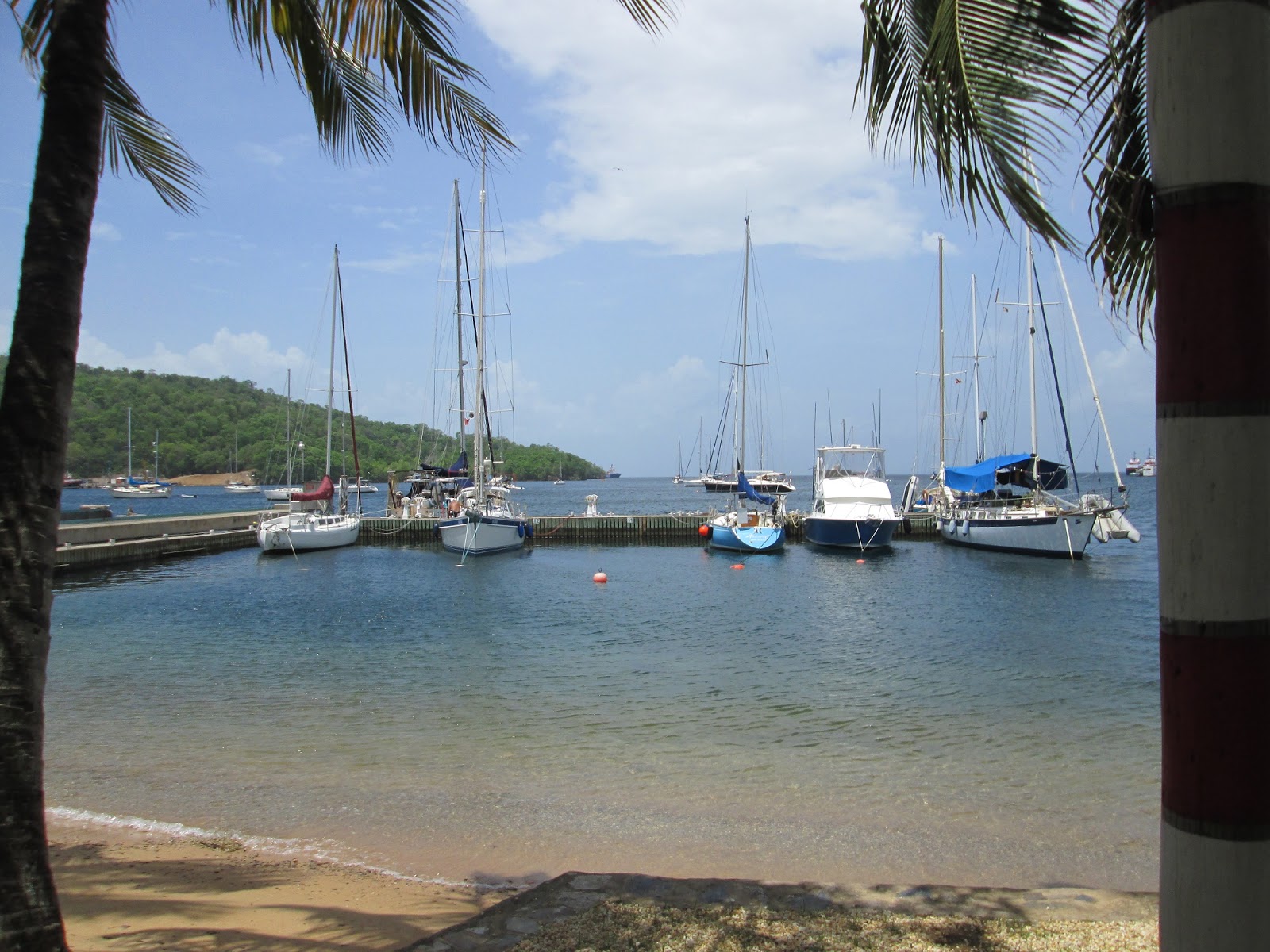
YACHTS LYING ON FORE AND AFT MOORINGS IN FRONT OF THE YACHT CLUB .

CREWS INN .
AN UPMARKET RESORT MARINA .

CREWS INN WATERFRONT .
RESTAURANTS , COFFEE SHOP AND VARIOUS RETAIL SHOPS .

PEAKE YACHT SERVICES .
RESTAURANT , SMALL HOTEL , OFFICES AND LAUNDROMAT .

PART OF THE STORAGE FACILITY .

PEAKES MARINA .
GENERALLY SERVES AS A PARKING LOT FOR BOATS WAITING TO BE HAULED .

GASPAR GRANDE ISLAND .
LIES OFF CHAGUARAMAS .

THE OWNER OF THIS BOAT OBVIOUSLY HAS NO INTENTIONS OF GOING ANYWHERE SLOWLY .

Sunday, May 22, 2016

BRAZIL TO THE CARIBBEAN .


This is a passage that l have looked forward to sailing for many years after hearing fellow sailors who have completed this route talk about strong North West setting currents and favourable trade winds all heading in the right direction with the end goal of arriving in the Caribbean .

The reality was a little different in that although there was plenty of current it wasn't always favourable and at times it was a little forward or aft of our beam causing our heading and course over ground to be very different as our autopilot compensated for the effects of the current . When it was in our favour we clocked good daily runs without even pressing the boat too hard with our best 24 hour run of 220nm ( 407km for the landlubbers ).

With the mighty Amazon River and other large powerful rivers off our port beam the influence that they have hundreds of miles off the coast is quite remarkable.
At one point during our passage we were sailing along nicely when we noticed what initially appeared to be a reef dead ahead of us . For miles across our bow a line of small wavelets and disturbed water stretched for as far as the eye could see and once we had entered this strip of troubled water the effects of a very powerful current at 90 degrees to our course were felt prompting our autopilot to change our heading to keep us on track . Visually there is a distinct change in the colour of the water and the water temp within an instant changes by up to 3 degrees Celsius . Bear in mind this is hundreds of miles off the coast in seas that are kilometres deep .
The best way to describe this scene is to imagine yourself standing on the banks of a large river in an open plain . We came across these “ rivers of current “ on many occasions during this passage .

At one point we started seeing rafts of vegetation streaming past us and later we found out that apparently the plant species is Sargasso Weed which is now spreading rapidly being swept along in these strong currents . I am told that if you take a clump of this weed and shake it many small crustaceans and small living organisms fall out and apparently these rafts provide protection for small fish that hide in their growth .

After rounding the North East corner of Brazil we headed virtually in a straight line for French Guiana . One night while doing the “ graveyard watch “ l noticed a glow off our port side which after checking the charts turned out to be the city of Fortaleza . Nothing amazing about that except that we were 78nm off the Brazilian Coast . I would never have believed that the artificial light generated from a city at night would extend that far offshore .

We were now in an area called the ITCZ commonly referred to as the doldrums . It is a belt of low pressure that circles the earth near the equator and it is characterized by erratic weather . Large cumulus cloud banks which lead to powerful rain squalls , generating torrential downpours accompanied by strong gusting winds . These nasties keep you on your toes and keeping a sharp look-out , mainly on radar at night is key in preventing being caught out unawares with too much sail up . The standard rule onboard is two reefs in the main every night at sunset and with our genoa being on a rollerfurler it is relatively easy to reduce our foresail area quickly . One night we were nailed by a biggie with winds gusting into the top forties and rain being blown horizontal to the surface. During the day these squalls are easy to monitor and at night they appear as large yellow shapes on our radar screen always with that menacing , angry look. The only good thing about them is that usually they don't last that long before they overtake you and move on although our biggie stayed with us for longer than we would have liked because we were slap in front of it's centre and it moved straight over us headed in the same direction as we were going .

But of course the highlight of this passage would be my first crossing of the Equator at sea behind the wheel of my own boat . A big moment in my life that we had to film using a GoPro camera because a squall chose to accompany us up to the line that separates the Northern and Southern hemispheres . Another large tick off the “ bucket list “.

This is also an area with a very interesting seabed . Huge seamounts ( mountains ) rising up from the floor of the ocean to just short of the surface .
One named Banco Canopus on our chart rises from 3000m ( 3kms ) to just 50m from the surface with its one face almost sheer to the bottom . It put a new perspective on how submarines would have to navigate to avoid colliding with one of these obstructions hundreds of miles at sea .

During the entire passage flying fish were in abundance , thousands of them with some unfortunate enough to land up on our decks and even in our cockpit . The special moments were when we had dolphins popping in for a visit as they almost seem excited to see you . Generally we spot them from a distance jumping clear of the surface while taking a good look at us , but once they reach our boat they tuck in and surf our bow wave . The best seat in the house is on the bowsprit and although l have enjoyed many contacts with dolphins over the years , seeing them that close turning on their sides and making eye contact is something to be cherished .

Finally Trinidad came into view and we sailed the length of the North Coast of the island heading for Boca de Monos the passage that leads into the Gulf of Paria and our final destination Chaguaramas where we tied up to the Customs Dock and checked into the country .

Our 2200nm voyage had gone really well and my good mate Philippe Gouffon turned out to be an excellent sailing companion , treating the boat like his own and always up to the task . He played a big part in making this passage a success .

What lies ahead is a number of seasons of cruising and exploring the Caribbean Islands , a mouthwatering prospect .


PASSAGE TO THE CARIBBEAN .

SPECIAL MOMENTS WITH DOLPHINS .
                                         
ANOTHER FLYING FISH BITES THE DUST .

TRAILS OF SARGASSO WEED FOR MILES ON END .

SAILING IN THE DOLDRUMS .
ONE RAIN SQUALL AFTER THE OTHER .

THE BIG MOMENT , CROSSING THE EQUATOR .

A TYPICAL TROPICAL RAIN SQUALL .
NOTE THE HEAVY RAIN AT IT'S BASE .

THE ONE THING MOST OF US DON'T DO OFTEN ENOUGH , WATCHING THE SUN RISE .

ANOTHER BEAUTIFUL SUNSET AT SEA .

THE NORTH COAST OF TRINIDAD .

HEADING THROUGH BOCA DE MONOS INTO THE GULF OF PARIA .

CHAGUARAMAS OUR FINAL DESTINATION AFTER 2200NM FROM BRAZIL .

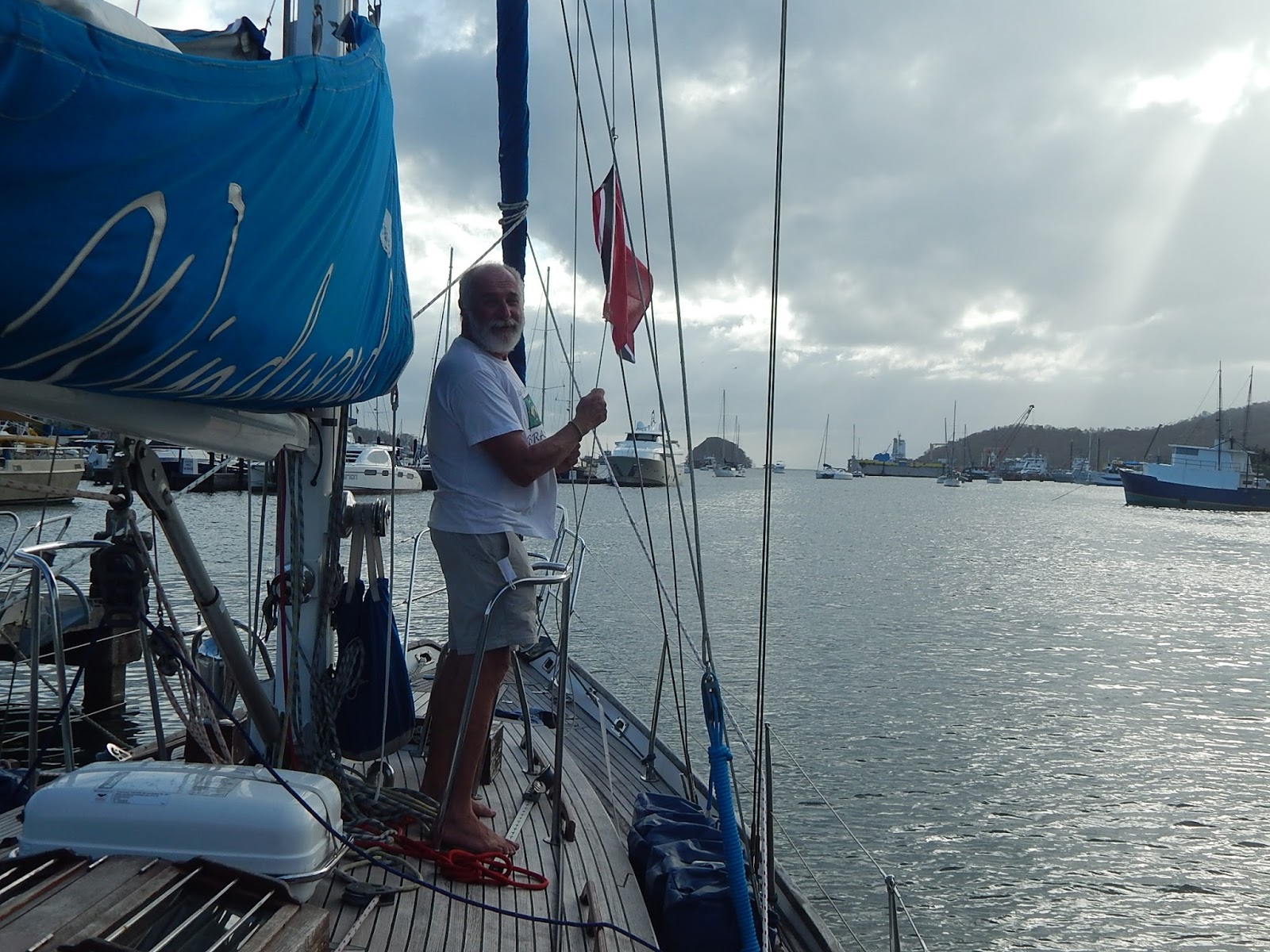
RAISING THE FLAG OF TRINIDAD & TOBAGO .

Saturday, May 14, 2016

ILES DU SALUT . DEVILS ISLAND .


Knowing that one of our stops on route to the Caribbean would be Iles du Salut often referred to as Devil's Island , l decided to re-watch the 70's movie Papillon , the story about a prisoner who escaped from this penal colony .
Well it is one thing to sit in the comfort of your home and watch the Hollywood version of the story of these prison islands but walking around the now defunct prison complex particularly if you have a wild imagination like mine tells a completely different story of the grim existence the prisoners must have experienced here .

Iles du Salut is in fact made up of three different islands all alongside each other namely Ile Royale , Ile Saint Joseph and Ile du Diable . Opened in 1852 it operated as one of the harshest of penal colonies for 101 years , finally being shut-down in 1953 when more and more people became aware of it's existence and the brutal conditions that inmates suffered while serving out their sentences there and with the public outrage that ensued the French government closed the facility for good .

Over 80000 prisoners were sent there with very few ever returning to France as apart from the extremely harsh conditions they lived under many died from disease and with the most hardened criminals being held there prisoner-on-prisoner violence was common .

Ile Royale was where the prisoners were received and held while Ile Saint Joseph must have been a living hell . This island was where prisoners were punished for either trying to escape or some form of misdemeanour and they were kept in solitary confinement in total darkness and silence . I stood in one of the tiny cells for around 15 minutes and tried to imagine what it must have been like to be locked up in one of these damp dark spaces in the humidity that these islands experience and came to the conclusion that dying while attempting an escape would be a far better option . It is unimaginable the suffering the inmates must have experienced in these cells bearing in mind that many held captive there were in fact innocent of the charges brought against them . At the time common-law criminals were convicted by juries rather than magistrates .

Probably the most famous prisoner was Captain Alfred Dreyfuss who was unjustly convicted of treason . He served his time on Ile du Diable which was reserved for political prisoners . 239 Republicans who opposed Napoleon along with 331 priests if my memory serves me correctly were sent here . It did not take much to become a resident of this horror island , a simple malicious rumour is all it took for many who rotted in this hell-hole.


For once the Hollywood version of a story was pretty tame compared to the reality of the true version of events . For those who were innocent it was an unspeakable tragedy .

ILES DU SALUT . DEVILS ISLAND , FRENCH GUIANA .

THE LANDING ON ILE ROYALE .

THE LANDING ON ILE SAINT JOSEPH .

ANCHORED OFF ILE ROYAL .
WITH A CROISSANT IN ONE HAND AND AN EXPRESSO IN THE OTHER , HOW FRENCH CAN YOU GET .

THE INFAMOUS ILE DU DIABLE .
THIS IS THE ISLAND WHERE THE POLITICAL PRISONERS WERE KEPT .

THIS IS THE HUT WHERE CAPTAIN ALFRED DREYFUSS LIVED .

THIS BUILDING NOW SERVES AS THE MUSEUM .

A LARGE TROOP OF THESE MONKEYS NOW INHABIT THE ISLAND .

THE RUINS OF ONE OF THE CELL BLOCKS .

THE PRISONERS WERE CHAINED TO THESE BARS .

ONE OF THE MORE UPMARKET CELLS .
THIS ONE COMES COMPLETE WITH AN OUTSIDE VIEW AND SUNLIGHT .
IF YOU WERE A MODEL PRISONER THIS WOULD BE YOUR ACCOMMODATION . 

A VIEW OF THE YARD IN THE LESS CONFINED SECTION .

A CELL BLOCK ON ILE ROYALE WHERE LIFE WAS A LITTLE MORE COMFY .

THIS CELL HAD A RAISED TIMBER PLANK ON A FRAME SO THAT YOU DID NOT NEED TO SLEEP ON THE FLOOR .
THINGS WERE NOT THAT COMFORTABLE ON ILE SAINT JOSEPH .

I DOUBT WHETHER THESE GUYS WOULD HAVE SURVIVED DURING THE DARK DAYS .

WINDWARD LYING AT ANCHOR WITH OUR MAKESHIFT COVER TO KEEP THE PORTLIGHTS OPEN AND THE FREQUENT RAIN SQUALLS AT BAY .

ILE SAINT JOSEPH IN THE DISTANCE .
THE ISLAND WHERE THE BADDIES WERE KEPT .

THIS BRIGHTLY COLOURED FELLA JOINED US FOR LUNCH .

THE CURRENTS RIP THROUGH THESE ISLANDS .

PITY ON THOSE WHO WALKED THROUGH THESE GATES .

THE HOSPITAL WITH THE LIGHTHOUSE BEHIND IT .

THE ANCHORAGE AT ILE ROYALE .

Tuesday, May 10, 2016

HOT AND HUMID IN KOUROU , FRENCH GUIANA .


After eight days at sea we arrived at daybreak off the town of Kourou and we headed for the start of the long and shallow channel which leads into the river and our planned anchorage . In the dark hours earlier l had spotted the light on Devil's Island and now in the early morning we could see the three islands which once housed thousands of convicted prisoners .

At the time when l was busy putting my passage plan together for this trip l had read a number of blogs which warned of powerful currents that sweep westward along the French Guiana coast so now we had over two knots forward of our beam which meant we were pointing our bow at an angle into the current to maintain our course down the channel commonly referred to as “ ferry gliding “ . On the way in we met the dredger Delta Queen plumb in the middle of the channel which as we later found out this specialist vessel blows the fine silt off the bottom on the ebb tide which allows the outgoing current to deposit it offshore . To maintain the entrance channels into Kourou and Cayenne respectively costs 6 million euros per annum .
My bullet-proof Spade anchor which has never let me down struggled to set in the soupy conditions that exist on the bottom of the river . The entire time that we spent in Kourou , l was always very relieved after returning from town to see Windward still safely anchored in the same spot because apart from the very poor holding on the bottom we also had to contend with very strong outgoing currents and to make matters worse our visit coincided with spring tides . We were basically the only yacht on anchor in the river with all the other boats firmly attached to either the town dock or the marina dock which are both extremely over-engineered to cope with the strong tides . A few tourist catamarans are tied to huge mooring buoys in the river but out of the main flow . A nasty anchorage .

After visiting French Guiana with its close proximity to the equator l came to the conclusion that one day when l finally hang up my sea boots l definitely will not live in the tropics . The heat and humidity is stifling and the continuous rain squalls that come and go day and night made life onboard pretty uncomfortable as we had to keep the hatches and portlights closed to avoid the boat's interior getting soaked .
During the day you can see the squalls approaching but on a calm night you hear them coming , a solid wall of water sweeping inland from offshore .

The one thing everyone carries on them in Kourou is an umbrella . One minute it is being used to keep yourself dry during a downpour and the next minute it is protecting you from the blazing sun . My mate Philippe and l got quite used to walking around in the pouring rain minus umbrellas , in fact l welcomed the rain just to cool off . The design of the houses and buildings in town explains it all . Their roofs have wide overhangs preventing the rain from coming through the permanently open windows .

Getting back to the town of Kourou , it would appear that the main economic driver is the very sophisticated Ariane Space Centre which just as a matter of interest has 17 launches planned for 2016 .
They claim that it is the world's best launch site in that with it's close proximity to the equator it provides an extra shot of energy due to the rotation of the earth providing a slingshot effect . The extra energy means that launchers can boost larger satellites at lower cost while extending the orbital life of these satellites . The other feature about this location is that there are no hurricanes and earthquakes to deal with although our much anticipated launch ( bucket list item ) was cancelled I hour before blast off due to heavy lightning .
It is an amazing facility offering three different rockets namely the Ariane , Soyuz and the smallest being the Vega each with their own launch sites and facilities . Each has a specific payload capacity starting with the Ariane ( 10,000kg ), Soyuz ( 5000kg ) and the Vega (1500kg ).

We found Kourou very expensive which was later confirmed when we were told that the cost of living in the town is 50% higher than in Paris . But with the Space Station being French , all the delicacies are available . At the fruit and veg market we came across the strangest looking fruits but after tasting each one they were totally unique in their flavour .

Our departure from Kourou came a bit early , a few hours before we had planned to leave . At around two in the morning l suddenly woke up with a slight sound on our hull and after rushing out into the cockpit we discovered that we were dragging anchor and the sound was a submerged tree touching the underside of our boat . We fired up our engine and hauled anchor only to find that my trusty Spade anchor had impaled a baby's pram , fouled a coil of cable and to top it all , a large length of steel had entwined itself in our chain . While l kept the boat in deep water Philippe removed the debris and that's when we decided , enough is enough , even though it was dark and raining we would follow our track that we had laid when we arrived and leave as against trying to reset the anchor for a couple more hours of sleep .

Once we were out in the channel we discovered that the lights on half of the channel marker buoys don't work so obviously the rocket ship that transports rocket components into Kourou does this passage in daylight hours .

We punched our way in the dark through the short steep chop until we reached deeper water and set a course for Trinidad in the Caribbean .    

KOUROU , FRENCH GUIANA .

THE APPROACH TO THE CHANNEL INTO THE RIVER IN KOUROU WITH DEVIL'S ISLAND TO STARBOARD . THIS PIC GIVES YOU SOME IDEA OF HOW STRONG THE CURRENT WAS FORWARD OF OUR BEAM.
NOTE THE VECTORS AND OUR HEADING IN COMPARISON TO OUR COURSE OVER GROUND.

THE ISLANDS THAT THE BOOK/MOVIE PAPILLON MADE FAMOUS .
THOUSANDS OF PRISONERS WERE HELD HERE IN APPALLING CONDITIONS .

PART OF THE ARIANE SPACE CENTRE FACILITY AS SEEN FROM OFFSHORE .

THE SMALL MARINA UPRIVER IN KOUROU .
THE DOCK IS HUGELY OVER-ENGINEERED TO COPE WITH THE STRONG OUTGOING CURRENT .

THE TOWN DOCK BUILT IN THE SAME WAY AS THE MARINA DOCK .

THESE TOURIST CATS ARE ATTACHED TO HUGE MOORING BUOYS TO COUNTER THE POWERFUL CURRENT .

THE DELTA QUEEN .
THIS DREDGER ACTUALLY BLOWS THE SEDIMENT OFF THE BOTTOM DURING AN OUTGOING TIDE ALLOWING THE CURRENT TO CARRY THE SILT OFFSHORE .

DURING THE LOW TIDE ALL THESE BOATS SIT IN THE PUTTY .

HIGH AND DRY .
NOTE THE BOARDING LADDER ON THE STERN .

A SAD ENDING .
AT SOME POINT IN TIME SHE WAS SOMEONES PRIDE AND JOY .

ALL DRESSED UP IN OUR SMART KIT TO CHECK IN WITH THE AUTHORITIES .
NOTE OUR FRIEND IVAN UP HIS MAST IN THE BACKGROUND .

A MONSTER WOOD CARVING AT THE CIRCLE IN KOUROU .

ROCKET TOWN .
NO PRIZES FOR GUESSING WHAT THIS TOWN IS FAMOUS FOR .

NOTE THE WIDE ROOF OVERHANGS ON ALL THE BUILDINGS .
THIS DESIGN PREVENTS THE RAIN FROM ENTERING THE OPEN WINDOWS DURING THE FREQUENT DOWNPOURS .

THE BARKING CHANNEL MARKER . 

ANABLEPS ANABLEPS .
THE FASCINATING FOUR EYED FISH FOUND IN THE ESTUARY .